
Overbite Correction: Braces vs Aligners — Which One Is Right for You?
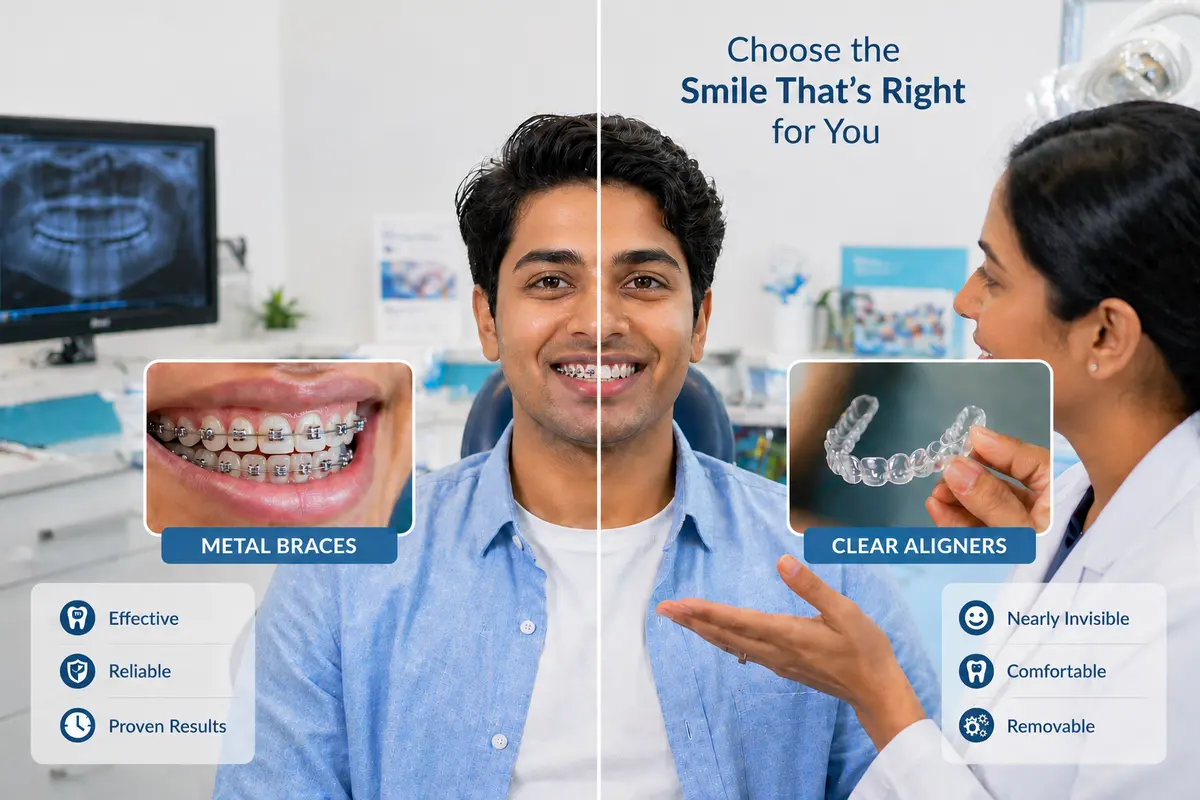
If your upper teeth noticeably overlap your lower teeth, you're dealing with what dentists call an overbite. It's one of the most common concerns a dentist in Bandra sees, and the good news is that overbite treatment today is more comfortable, effective, and discreet than ever before.
Whether you've just been told by your dentist that you need to address an overbite, or you've been quietly wondering about it for years, this guide is here to help. We'll walk you through what an overbite actually is, why it matters, and most importantly how braces and clear aligners stack up when it comes to fixing it.
What Exactly Is an Overbite?
An overbite occurs when the upper front teeth overlap the lower front teeth more than they should. A slight overlap of about 2 to 4 mm is perfectly normal. But when the upper teeth cover more than 30 to 40% of the lower teeth, it's considered a deep overbite and that's when overbite treatment becomes important.
Overbites can be skeletal (caused by the shape and position of the jaw) or dental (caused by the positioning of the teeth themselves). Most cases treated with braces or aligners are dental in nature, though moderate skeletal overbites can also respond well to orthodontic care, especially when treatment begins early.
Did You Know? Left untreated, a deep overbite can cause more than just cosmetic concerns. Over time, it may lead to uneven tooth wear, jaw pain, difficulty chewing, speech changes, and even gum damage as the lower teeth press against the upper palate.
Why Overbite Treatment Matters
Many people assume an overbite is purely a cosmetic issue — a matter of how their smile looks. In reality, it has functional consequences too. When your bite isn't aligned properly, your jaw muscles work harder to compensate. Over months and years, this can result in chronic jaw tension, headaches, and temporomandibular joint (TMJ) discomfort.
Beyond the physical effects, there's the confidence factor. A smile you're unhappy with can affect how freely you laugh, speak, and present yourself. Addressing an overbite isn't just about dental health — it's an investment in your overall wellbeing.
Worried about your overbite? Our expert orthodontic team at Aakaar Dentistry can assess your bite and guide you to the right treatment — braces or aligners.
The Two Main Options: Braces and Clear Aligners
When it comes to overbite treatment, orthodontists typically recommend one of two approaches: traditional metal braces or clear aligners. Both are proven, effective methods but they work differently and suit different lifestyles.
Braces for Overbite Correction
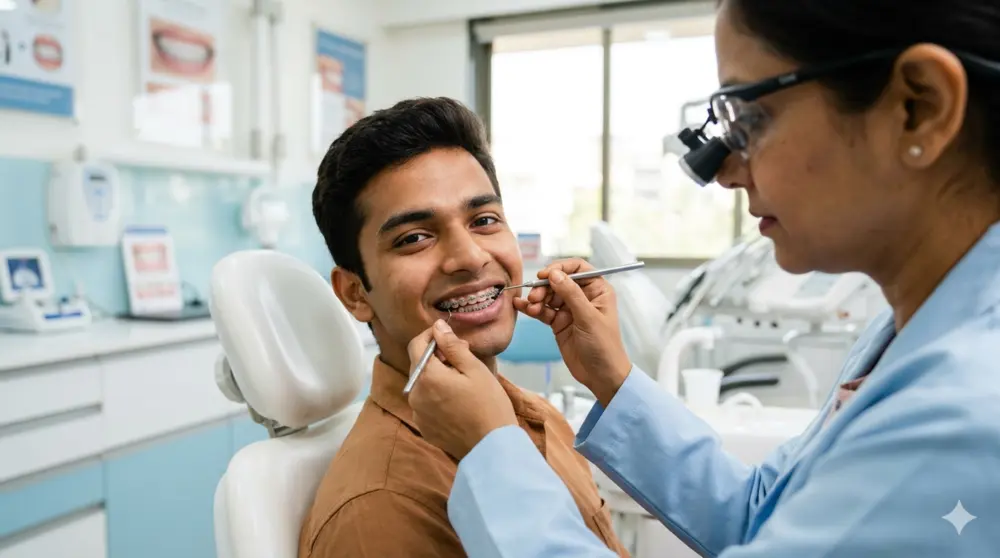
Traditional braces have been the gold standard in orthodontics for decades and for good reason. They give your orthodontist precise control over the movement of every single tooth. For severe or skeletal overbites, braces combined with tools like bite turbos, coil springs, or rubber band configurations can produce remarkable results that aligners may not be able to achieve alone.
Modern braces have come a long way. Today's options include ceramic (tooth-coloured) brackets that are far less noticeable than the metal brackets of the past. The treatment process involves periodic adjustment appointments where the archwire is tightened to gradually shift the teeth and correct the bite.
The main trade-offs with braces are aesthetic and practical: they're visible, they require some adjustments to your diet (avoiding hard or sticky foods), and keeping them clean takes extra effort. But for complex overbite treatment cases, their effectiveness is hard to match.
- Metal or ceramic brackets bonded directly to teeth
- Connected by archwires and elastic bands
- Always in place — no removal needed
- Highly effective for deep or complex overbites
- Typically 18 to 24 months of treatment
- Generally more affordable upfront
Clear Aligners for Overbite Correction
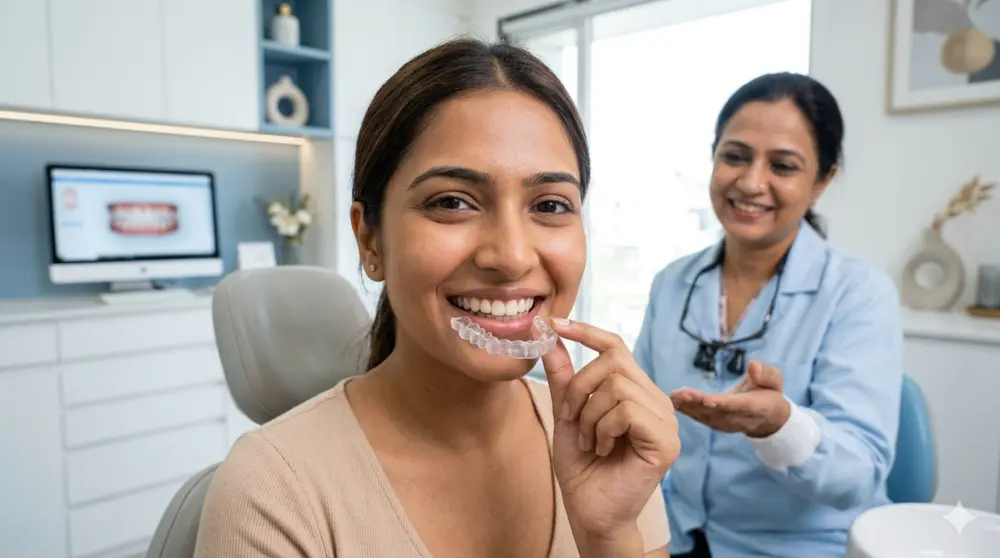
Clear aligners, such as Invisalign and other custom systems, have transformed orthodontics over the past two decades. These are a series of custom-fitted, transparent plastic trays that you wear for 20 to 22 hours a day, swapping to a new set every week or two as your teeth progressively move into position.
For mild to moderate dental overbites, clear aligners are remarkably effective. Advanced aligner systems now incorporate attachments — small tooth-coloured buttons bonded to specific teeth — that help guide complex movements including the vertical shifts needed to correct an overbite.
The lifestyle benefits are significant. Aligners are removable, so you eat and drink without restriction. Brushing and flossing remain easy. And because they're clear, most people around you won't even notice you're in treatment — a huge advantage for working professionals and adults who want a discreet path to a better smile.
- Custom-made, removable transparent trays
- Changed every 1 to 2 weeks
- Nearly invisible when worn
- Ideal for mild to moderate overbites
- Typically 12 to 18 months for suitable cases
- More comfortable, no dietary restrictions
Not sure whether braces or aligners are right for your overbite? Our specialists at Aakaar Dentistry will assess your case and recommend the most effective solution for you.
Side-by-Side: How They Compare for Overbite Treatment
- Overbite Severity — Braces handle mild to severe cases. Clear aligners are best suited for mild to moderate overbites.
- Visibility — Braces are visible (ceramic brackets less so). Clear aligners are nearly invisible when worn.
- Comfort — Braces may cause some initial soreness from wires. Aligners use smooth plastic and are generally easier to adapt to.
- Diet Restrictions — Braces require avoiding hard or sticky foods. Aligners have no restrictions as they are removed before eating.
- Oral Hygiene — Braces require more effort to clean around brackets. Aligners are removed for brushing and flossing as normal.
- Discipline Needed — Braces are fixed so no action is required. Aligners must be worn 20 to 22 hours per day consistently.
- Treatment Duration — Braces typically take 18 to 24 months. Clear aligners for suitable cases typically take 12 to 18 months.
Which One Should You Choose?
The honest answer? It depends entirely on your specific situation and there's no single right answer for everyone. Here's a practical way to think about it.
Braces may be the better choice if your overbite is deep or skeletal, if your case involves significant crowding or multiple alignment issues alongside the overbite, or if you're treating a growing child or teenager where full-time compliance with removable devices is uncertain.
Clear aligners may be the better choice if your overbite is mild to moderate, if discretion and lifestyle flexibility are important to you, and if you're disciplined enough to wear them consistently. Adults who want to correct an overbite without the look of traditional braces often find aligners to be a life-changing option.
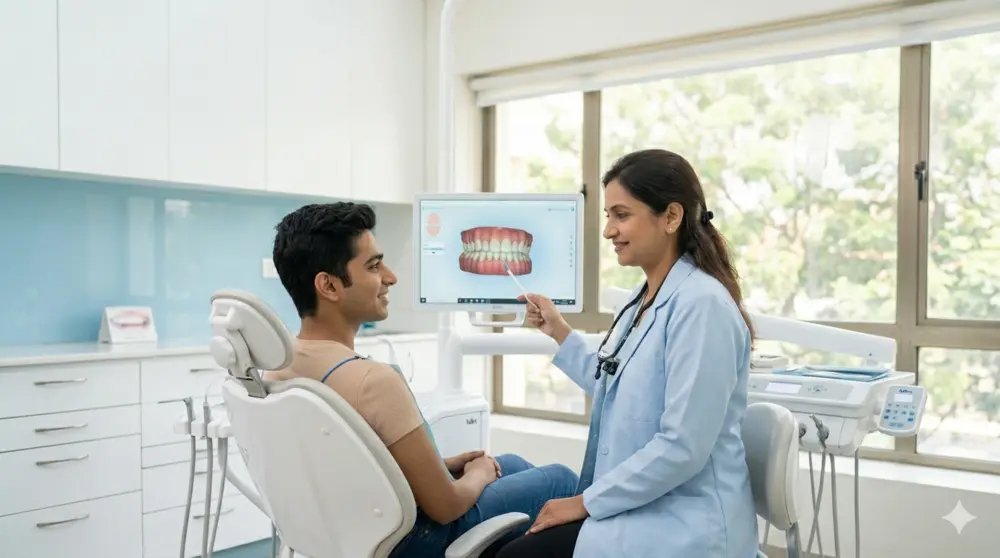
The most important step you can take is to have a thorough consultation with an experienced orthodontist. They'll assess your bite using digital imaging, study models, and clinical examination to tell you not just what can be done but what approach will give you the best, most lasting result.
A Word on Retention: Whichever treatment you choose, retainers are non-negotiable afterward. Overbite correction — whether achieved through braces or aligners — requires a period of retention to hold your new bite in place. Skipping retainers is the most common reason overbites relapse. Your orthodontist will advise you on the best retention protocol for your case.
Ready to fix your overbite? At Aakaar Dentistry, Bandra West, our team uses state-of-the-art digital imaging to craft the right overbite treatment plan for your unique smile.
Starting Your Overbite Treatment Journey
If you've been putting off addressing your overbite, now is a great time to take that first step. Modern overbite treatment is more accessible, comfortable, and effective than it has ever been. Whether you end up in braces or aligners, the outcome — a healthier bite, reduced jaw strain, and a more confident smile — is well worth the journey.
Don't let uncertainty hold you back. A single consultation with the right dental team can clarify your options, give you a realistic sense of what treatment will look like, and set you on the path to a smile you're genuinely proud of.
At Aakaar Dentistry, Best Dentist in Bandra, led by Dr. Ankita Gehi and Dr. Dhananjay Hemmady, we specialise in personalised orthodontic care — including both traditional braces and advanced clear aligner therapy. Ranked among Mumbai's top dental clinics in the Times Health Survey 2025, our team uses state-of-the-art digital imaging and a gentle, patient-first approach to craft the right overbite treatment plan for your unique smile.
FAQs
A small overbite of around 2 to 4 mm is completely normal. However, a deep overbite — where the upper teeth cover more than 30 to 40% of the lower teeth — can cause real problems over time, including uneven tooth wear, jaw pain, difficulty chewing, speech changes, and gum damage. So while a mild overbite may not need treatment, a deep overbite is worth addressing sooner rather than later.
Yes, overbites are very treatable. The two most effective options are traditional braces and clear aligners. Braces are ideal for deep or complex overbites, while clear aligners work well for mild to moderate cases. In some cases involving skeletal issues, additional appliances or even surgery may be considered. A consultation with an experienced orthodontist will determine the best approach for your specific situation.
Overbites can be dental or skeletal in nature. Dental overbites are caused by the positioning of the teeth themselves, often due to habits like thumb sucking in childhood, prolonged use of a pacifier, or nail biting. Skeletal overbites are related to the shape and position of the jaw, which is often inherited genetically. Most overbites treated with braces or aligners are dental in nature.
Yes, clear aligners are a popular and effective alternative to braces for fixing mild to moderate overbites. They are removable, nearly invisible, and comfortable to wear. However, for severe or skeletal overbites, traditional braces may still be the more effective option. In rare cases, surgical intervention may be required. The right choice depends on the severity of your overbite, which an orthodontist can assess during a consultation.
Reference Links:
Disclaimer: The content shared on this page is for informational purposes and not for promotional use.