
Signs You May Need a Root Canal

Your teeth are trying to tell you something — and if you've been brushing off that nagging ache, the strange sensitivity, or the odd discolouration, it might be time to listen. Root canal symptoms are your body's way of waving a red flag. The sooner you pay attention, the better the outcome.
The phrase "root canal" has a reputation for being scary. But here's the truth: the procedure itself is far less daunting than what happens when you ignore the underlying problem. Modern dentistry has transformed root canal treatment into a routine, comfortable procedure that saves your natural tooth and relieves you of pain, not causes it.
So how do you know when you might need one? Understanding the warning signs is the first step toward protecting your dental health — and your overall wellbeing.
What Is a Root Canal, and Why Would You Need One?
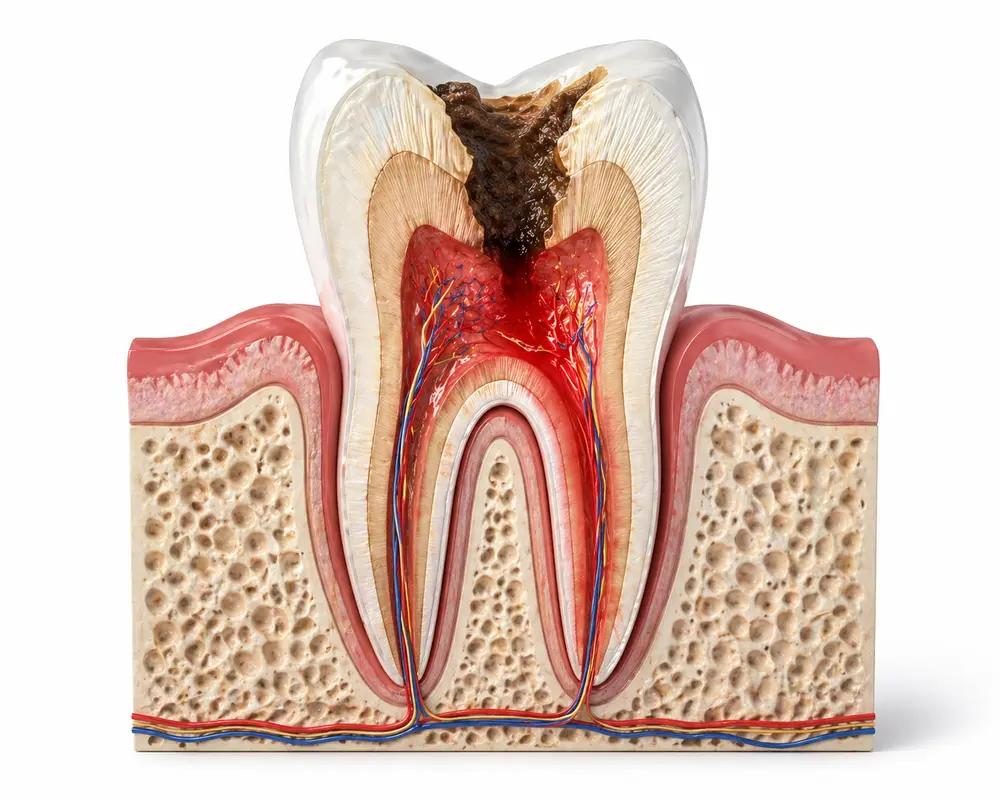
Inside every tooth lies a soft inner layer called the pulp, which contains nerves, blood vessels, and connective tissue. When this pulp becomes infected or inflamed — due to deep decay, repeated dental procedures, a crack, or trauma — it can no longer heal on its own. Left untreated, the infection spreads, potentially leading to abscess, bone loss, or the loss of the tooth entirely.
A root canal treatment removes this damaged pulp, cleans and seals the inner chamber of the tooth, and protects it with a crown. The result? Your natural tooth is preserved, the infection is eliminated, and you're back to normal function — usually within one or two comfortable visits.
Root Canal Symptoms You Shouldn't Ignore

4. Tooth Discolouration or Darkening
A tooth that is turning grey, brown, or noticeably darker than those around it may be showing signs of internal tissue breakdown. When the pulp is dying or already dead, the tooth loses its natural colour from the inside out. This kind of discolouration — especially when combined with any pain or sensitivity — is a visual root canal symptom worth flagging during your next dental visit.
5. Pain When Biting or Chewing
If applying pressure to a tooth — biting into food or even just pressing your teeth together — causes pain or discomfort, the inner nerve tissue may be inflamed or the surrounding ligaments may be affected by infection. This is a particularly important root canal symptom because many people try to simply chew on the other side and put off the visit. Unfortunately, the underlying issue only worsens with time.
6. A Cracked or Chipped Tooth
Teeth can chip or crack due to trauma, hard foods, or even teeth grinding. When the crack extends deep enough to expose the pulp, bacteria can enter and cause infection. Even a crack that appears minor on the surface might be far more significant beneath it. If a tooth has been chipped or cracked — even without immediate pain — it warrants an evaluation, as infection can set in over time without obvious symptoms at first.
Experiencing persistent tooth pain, sensitivity, or swollen gums? Don't wait. Our expert team at Aakaar Dentistry can diagnose and treat root canal symptoms before they worsen.
7. Loose Tooth with No Obvious Cause
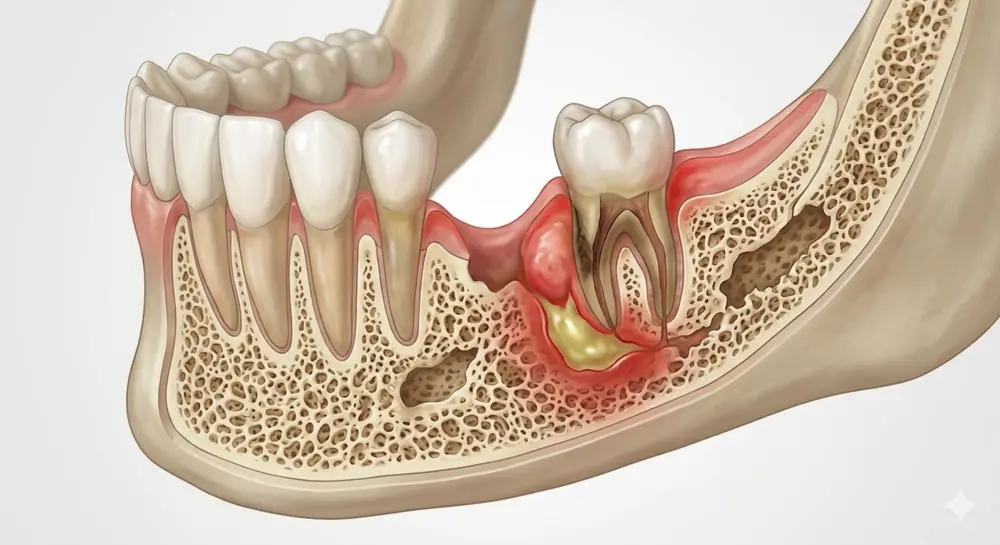
If a permanent tooth feels wobbly or loose and you haven't experienced any trauma or injury, this could be a sign of a dental abscess. Infection from an inflamed pulp can soften the bone around the tooth root, causing instability. This is a serious root canal symptom that should prompt an immediate dental visit to prevent further bone loss or complete tooth loss.
8. A Deep Cavity Left Untreated
Sometimes there's no dramatic pain — just a cavity that's been quietly growing. When decay reaches the inner pulp of the tooth, bacteria colonise the space and begin breaking down the tissue. At this stage, a simple filling is no longer enough, and a root canal becomes necessary to clean the tooth from the inside out. Regular dental check-ups help catch decay early, before it ever reaches this point.
What Happens If You Ignore the Symptoms?
Dental infections do not resolve on their own. Unlike a common cold, an infected tooth pulp cannot be fought off by your immune system alone. Without treatment, the infection continues to spread — into the surrounding bone, the nearby teeth, and potentially beyond.
An untreated abscess can develop into a serious, even life-threatening condition in rare cases, as the infection spreads to the jaw, neck, or head. More commonly, it leads to bone loss, the destruction of adjacent teeth, and eventually the complete loss of the affected tooth.
Important: Not every case of infected pulp presents with pain. In some instances — particularly when the nerve has completely died — a tooth may feel entirely pain-free while the infection is still active and spreading. This is why regular dental X-rays and check-ups matter, even when nothing feels wrong.
Replacing a lost tooth — with implants, bridges, or dentures — is far more costly, time-consuming, and complex than simply treating the original root canal symptoms early. Preserving your natural tooth is always the preferred option, and root canal therapy makes that possible.
Noticed any of these warning signs? Early treatment saves your natural tooth and prevents the infection from spreading. Let our specialists at Aakaar Dentistry help you today.

Dispelling the Fear: Root Canal Treatment Today
It's worth taking a moment to address the anxiety many people associate with root canal treatment. The fear largely stems from outdated experiences or second-hand stories from decades past, when dental techniques were far less refined.
Today, root canal procedures are performed under local anaesthesia and are typically no more uncomfortable than getting a routine filling. The tooth is numbed, the infected pulp is carefully removed, the canal is cleaned and shaped, and the tooth is sealed and capped with a crown. Most patients are surprised at how uneventful the process actually is.
Modern dentistry has also brought in rotary instruments, advanced imaging, and microscope-assisted techniques that make the process quicker, more precise, and more comfortable than ever before.
When Should You See a Dentist?
If you are experiencing any of the root canal symptoms listed above — or even a combination of them — schedule a dental appointment as soon as possible. Early diagnosis significantly improves outcomes. A dentist in Bandra will examine the tooth, take X-rays to assess the extent of damage or infection, and recommend the appropriate course of treatment.
In some cases, what appears to be a root canal situation might be resolved with a deep cleaning, antibiotic therapy, or a different procedure. Only a proper examination can determine the right approach. What's certain is that waiting won't make it better — and could make it considerably worse.
Experience Painless Root Canal Treatment at Aakaar Dentistry
At Aakaar Dentistry, Dental Clinic in Bandra West, Mumbai, we believe that dental care should feel empowering — not frightening. Led by Dr. Ankita Gehi, a highly skilled prosthodontist and implantologist with over 12 years of experience, and Dr. Dhananjay Hemmady, who brings more than 20 years of clinical expertise, our team specialises in making complex treatments — including root canals — feel comfortable, straightforward, and stress-free.
We use the most advanced technology and modern techniques to ensure that your root canal procedure is as smooth and painless as possible, with minimal downtime and exceptional results. At Aakaar, you're never just a patient — you're a valued guest, and your comfort, comprehension, and individual needs come first at every step.
If you've been experiencing any of the root canal symptoms described in this article, don't wait. The sooner you act, the better we can protect your natural tooth — and your smile. Book a consultation with our expert team today and take the first step toward relief.
Don't let fear hold you back. Aakaar Dentistry offers painless, comfortable root canal treatment in Bandra using state-of-the-art technology. Book your consultation today.
Still have questions? Here are some of the most common ones we hear from patients.
FAQs
Some common signs include a constant or throbbing toothache, sensitivity to hot or cold that lingers, pain while chewing, or swelling around the gums. In some cases, you might notice a small bump like a pimple on the gums or tooth discolouration. If the pain keeps coming back or gets worse over time, it is a good idea to get it checked by a dentist.
In the early stages, it usually starts as mild discomfort like sensitivity to sweets, hot, or cold foods. You might feel occasional pain that comes and goes, or slight tenderness when biting. At this point, the infection or decay is just starting to reach the inner part of the tooth, and catching it early can help avoid more severe pain later.
A cavity usually causes mild to moderate sensitivity or occasional pain, especially when eating something sweet or cold. But if the pain becomes severe, lingers for a long time, or happens even without eating, it could mean the infection has reached the tooth's nerve — this is when a root canal might be needed. The best way to know for sure is through a dental check-up and X-ray.
It is often described as deep, throbbing pain that does not go away easily. The pain can feel intense when you bite down or apply pressure, and it may even spread to your jaw, ear, or head. Some people also feel sensitivity that stays long after having something hot or cold. In certain cases, the pain can suddenly stop — but that does not always mean the problem is gone.
Unfortunately, no. Once the infection reaches the inner pulp (nerve) of the tooth, it cannot heal on its own. The infection needs to be removed to save the tooth and prevent it from spreading. Delaying treatment can lead to more pain and bigger issues later, so it is always better to address it early.
References:
Disclaimer: The information shared in this content is for educational purposes only and not for promotional use.